
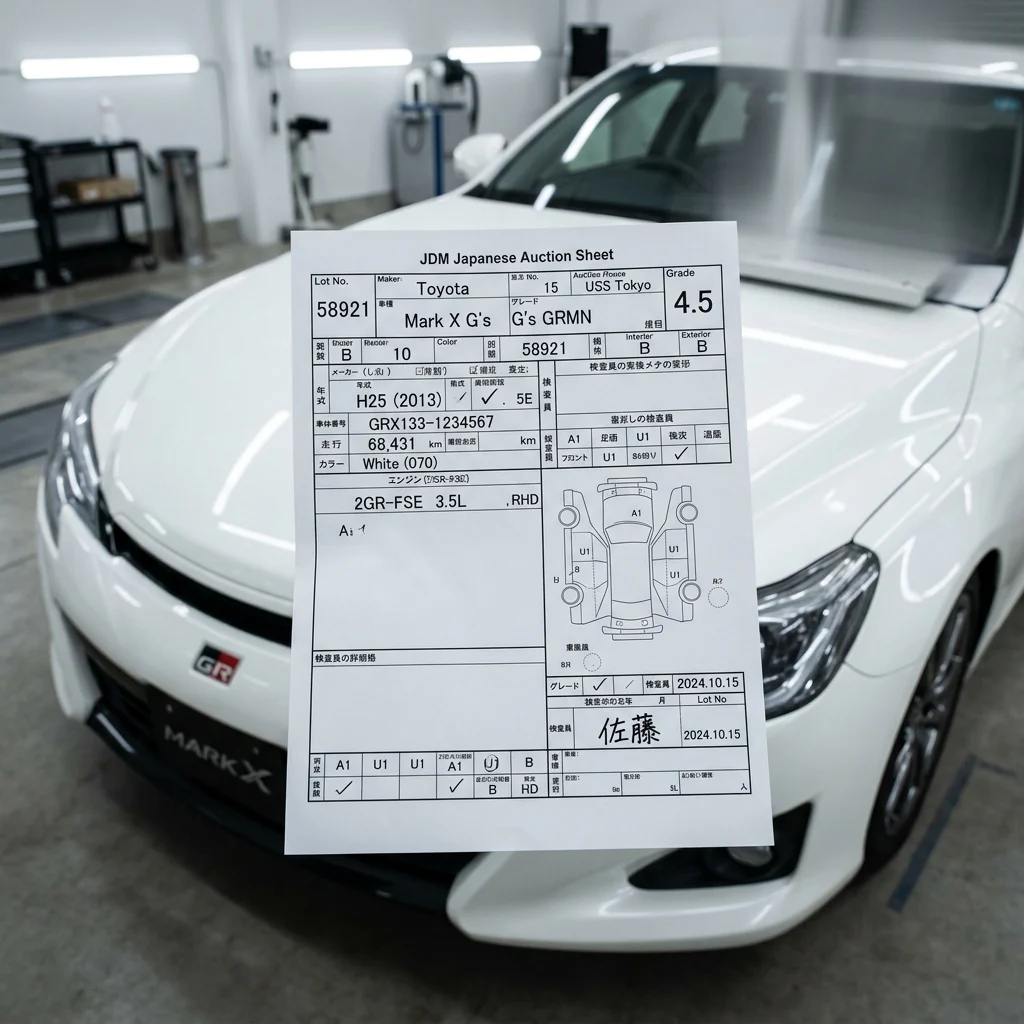

For anyone interested in buying a Japanese imported car (JDM) in Pakistan, the most critical document to verify is the auction sheet. But what is a car auction sheet? Essentially, it is a detailed inspection document prepared by professional auction house evaluators in Japan before a vehicle is sold. It lists the car’s exact cosmetic and mechanical condition, mileage, and history.
Understanding JDM Auction Grades
The auction sheet features an overall grade (usually a number from 1 to 5, or letters like S and R) representing the vehicle’s condition:
| Grade | Condition Meaning |
|---|---|
| S / 6 | Brand new car with delivery mileage only. |
| 5 | As close to new as possible; exceptionally clean interior and exterior. |
| 4.5 | Excellent condition; minor scratches or small dents that are barely visible. |
| 4 | Good condition with some visible scratches, wear, or minor repairs. |
| 3.5 | Average condition; requires minor cosmetic body or paint repair. |
| R / RA | Repaired vehicle; has a history of accidents or structural panel replacements. |
Reading the Body Map Symbols
The sheet displays a diagram of the car with letters and numbers pointing to specific panels:
- A: Scratches (A1: Small, A2: Medium, A3: Large).
- U: Dents (U1: Small, U2: Medium, U3: Large).
- W: Wave or repainted panels (W1: Good repair, W2: Visible repair, W3: Poor repair).
- XX: Replaced panel (e.g., fender or door replaced with OEM parts).
Guarding Against Fake or Tampered Sheets
Due to high demand, some unscrupulous local importers create fake auction sheets, turning a Grade R (accidental) car into a Grade 4.5 clean vehicle with rolled-back mileage. Always verify the auction sheet online using the chassis number before placing a bid on PerfectCar Auctions. If you want a physical verification, you can book an on-site car inspection to confirm the body paint thickness and scanner diagnostics.
For more comparisons on used car purchasing options, check out our article on car auction vs dealer structures.



Comments (0)
Leave a Comment